dinglimachine01@gmail.com
+86 16638159081(Wechat/WhatsApp)
dinglimachine01@gmail.com
+86 16638159081(Wechat/WhatsApp)

The carbonization process of rice husks is a delicate material evolution guided by gentle heat. It doesn't rely on violent combustion, but rather on a quiet and profound pyrolysis journey in an environment with little or no oxygen. This differs from the flamboyant nature of traditional burning; it's more like a restrained cultivation, allowing the carbon elements in the rice husks to be preserved and stabilized to the greatest extent possible.
The entire process is filled with the rhythm of nature and the precision of technology. When the rice husks are heated in the carbonization machine, the volatile substances gradually precipitate out, and the remaining carbon skeleton reconstructs into a robust porous structure. This structure is the source of many excellent properties of the final product. It avoids the smoke and dust and nutrient loss caused by open-air burning, firmly locking potentially dissipated energy and matter within the newly formed charcoal.
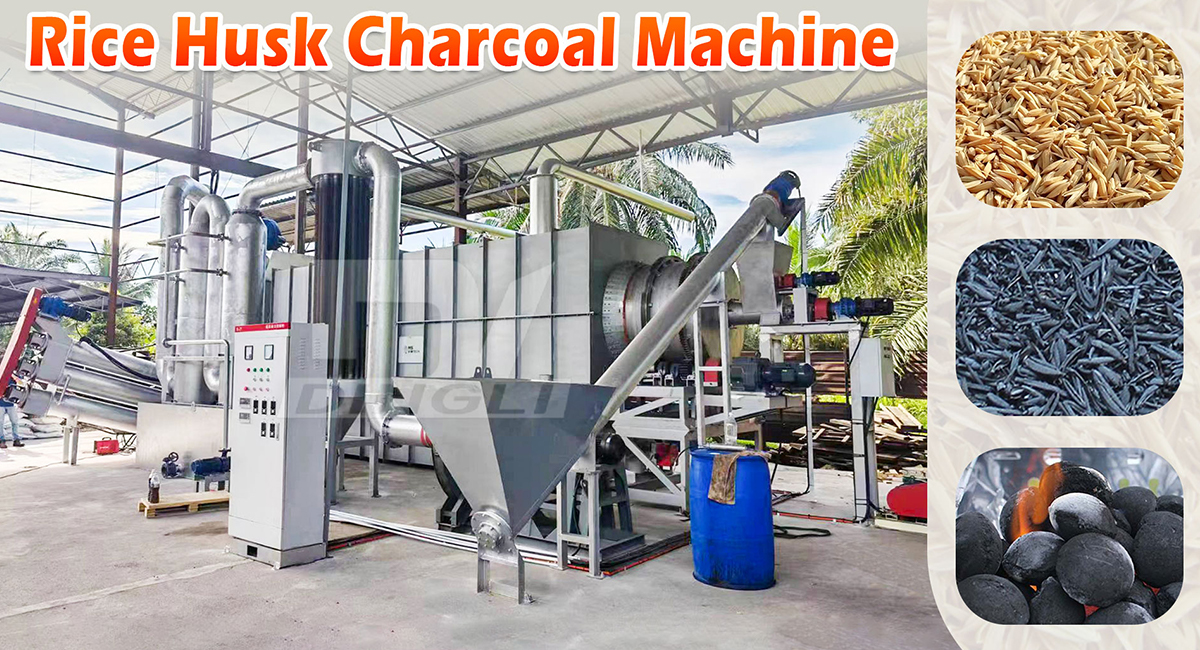
The resulting biochar is black in appearance and lightweight in texture, yet it contains a huge surface area and abundant pores. These tiny pores become an ideal place for absorbing nutrients, retaining moisture, and supporting beneficial microorganisms. When it returns to the soil, it acts like a miniature, vibrant castle, silently improving the soil's physical and chemical properties, creating a healthier foundation for crop growth.
Even more valuable is that this transformation process itself is environmentally friendly. It transforms agricultural byproducts into beneficial soil conditioners, completing a perfect ecological cycle. Energy is effectively utilized within the system, and matter is reborn in another form. Rice husk carbonization, in this seemingly tranquil transformation, achieves a deep exploration of resource value and a positive return to the ecological environment, silently resonating with the thunderous message of ecological balance and sustainable agricultural development.
I would like to ask for a price quotetion for DLTJ2212.
Hello. How much is your "DLTJ1912" model?
Please send offer for biochar making machine with all technicals spécifications
We are in need of a rice husk charcoal machne for bio coal making.
We are intrested in contiunous carbonization machine, we need a high capacity.
We are interested in biomass pyrolysis machine 2 tons per hour .
Interested in wood charcoal machine. what price and size of wood it creates?